Choosing a tech stack looks like a technical decision. In reality, it's a business decision — one that shapes how fast you grow, how much you spend on infrastructure, and how easy (or painful) it is to scale. Getting it wrong costs you months and sometimes the whole product.
What Actually Matters
Most stack debates get stuck on the wrong question: “Which framework is better?” The right question is: “Which stack fits this product, this team, and this budget?” Four things determine the answer:
Product type & stage
An MVP needs speed above all — the wrong stack can add months to your timeline. A scaling SaaS needs reliability. An internal tool needs maintainability. The right answer changes completely based on where you are.
Team expertise
The best stack is the one your team knows deeply. A senior Flutter team will ship faster in Flutter than in React Native, regardless of which is theoretically "better." Don't solve a people problem with a technology decision.
Budget & infrastructure costs
Serverless architectures can be extremely cheap at low scale and expensive at high scale. Some databases cost nothing to run but $50k/month under load. Model your infrastructure costs at 10x your current usage before committing.
Community & long-term support
A framework with 10,000 GitHub stars and 3 active maintainers is a liability. You want a large ecosystem, regular updates, and documentation you can actually hire against. Obscure stacks create hiring bottlenecks.
“The stack that gets you to market fastest is almost always better than the stack that's theoretically optimal.”
So How Should You Approach It?
There's no universal answer, but there is a process that works. These four steps consistently lead to better decisions across the products we've built at LYQX:
Define what you're building first
User-facing consumer app? Internal dashboard? Real-time data pipeline? API-first SaaS? Each has a different optimal answer. Don't touch the tech conversation until you can describe the product in one sentence.
Inventory your team's real strengths
Be honest. Not what technologies your team knows theoretically — what they've shipped production apps with. The stack you've already proven is worth more than the stack you find exciting.
Build for now, not hypothetical scale
"What if we get 10 million users?" is a good problem to have — but building for it before you have 1,000 users adds cost, complexity, and time without any benefit. Start simple. Optimize when the data tells you to.
Validate costs before you commit
Run pricing calculators. Talk to your cloud provider's sales team. Find founders who've built on the same stack and ask what surprised them. The hidden costs in infra can derail a product faster than bad code.
Three Real Products, Three Different Answers
Here's how we approached the stack decision for three very different products at LYQX — and why each choice made sense for that specific context:
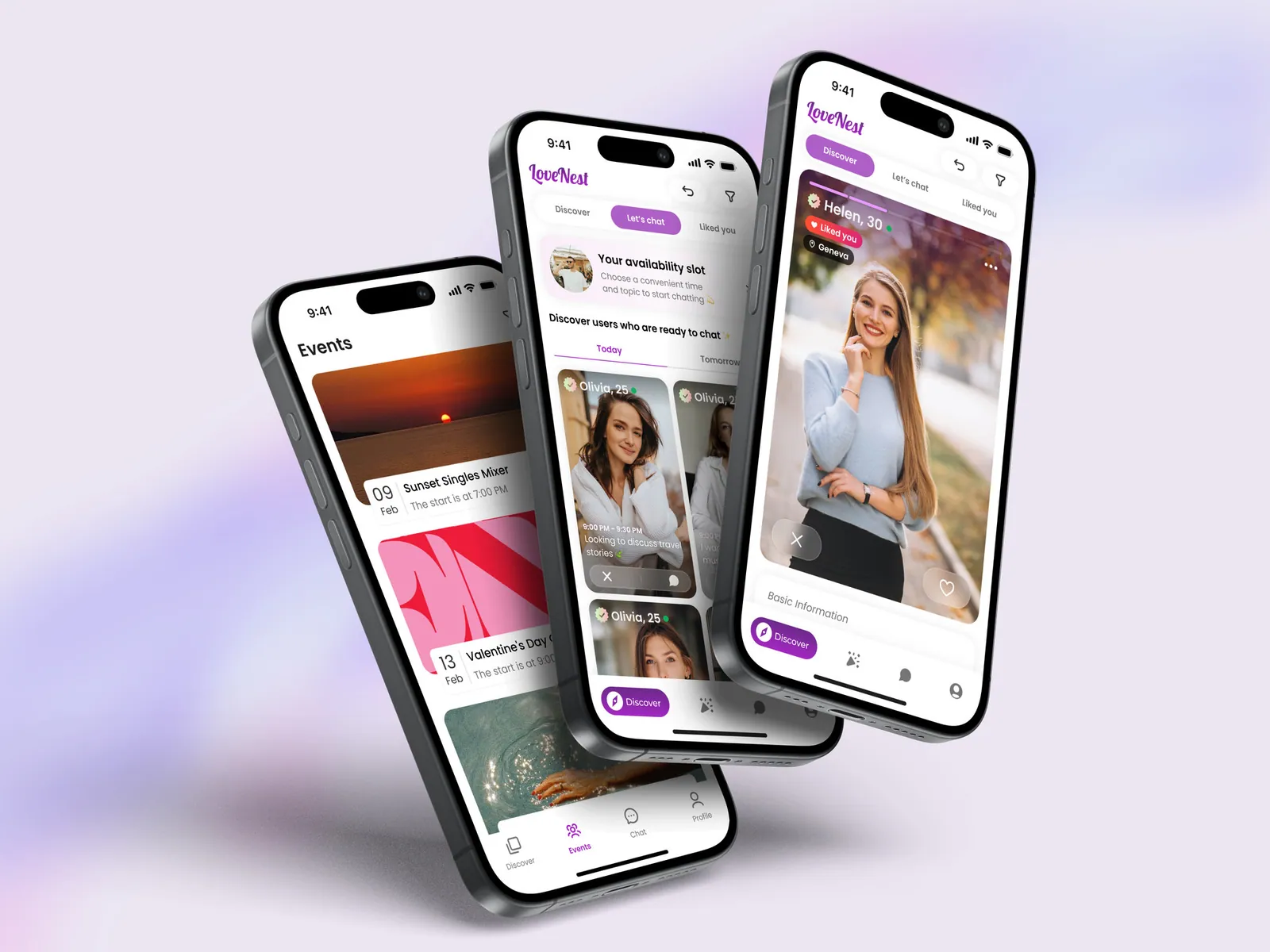
Why this stack: Cross-platform mobile with real-time features required a stack that could share 90%+ of code without sacrificing performance.
Outcome: Single codebase for iOS, Android, and web. Half the engineering time vs. native. Flutter's reactive UI made the complex matching interface feel instant.
Why this stack: Real-time data requirements and the need for a single team to ship web, iOS, and Android simultaneously drove the stack decision.
Outcome: 150 players, $50k in a single tournament day, 100+ events per year. Real-time leaderboards with zero downtime.
Why this stack: Speed to market was the top priority. FlutterFlow handled the UI scaffolding; the custom backend gave control over the regulated financial operations.
Outcome: Shipped an MVP in 6 weeks instead of 6 months, with a full custom API layer for the financial logic that couldn't be templated.
Key Insight
The Best Stack Is the One You'll Actually Ship With
Every product we've shipped used a different combination of tools — and in every case, the deciding factor wasn't which framework benchmarks faster. It was which choice let the team move confidently, ship early, and learn from real users. Theory is cheap. Working software is the only thing that matters.
A question worth asking yourself:
If you had to choose today — what would matter more for your product: speed to market or long-term scalability? The answer usually tells you everything about the right stack.
Read Next

How to Pass App Store and Google Play Review for an E-commerce App
 Yurii Lysyshak·Store Submission
How Mobile Apps Are Transforming the Golf Industry: $50,000 Per Day Story
Yurii Lysyshak·Case StudyLYQX — Full-cycle Digital
Not sure what stack to pick?
We've shipped cross-platform apps, SaaS platforms, and AI products across dozens of stacks. Tell us what you're building — we'll tell you what we'd use and why.